
Audio and Video Transcription: Stable Remote Income from Home in 2026
Transcription has quietly become one of the most consistent ways to earn from home, especially as demand for digital content continues to grow across media, education, business, and legal sectors. In 2026, companies increasingly rely on accurate text versions of audio and video for accessibility, SEO, and internal documentation. This creates a steady stream of work for freelancers who can listen carefully, type accurately, and meet deadlines without needing advanced technical skills or expensive equipment.
Why Transcription Remains a Reliable Source of Remote Income
One of the key reasons transcription continues to offer stable earning opportunities is the sheer volume of audio content being produced daily. Podcasts, webinars, interviews, online courses, and corporate meetings all require written records. Businesses are under pressure to make content searchable and accessible, particularly in regions where accessibility regulations have tightened since 2024.
Another factor is the global shift towards remote collaboration. Teams across different time zones depend on transcripts to review meetings, extract decisions, and maintain documentation. This creates ongoing demand for transcriptionists who can deliver clear, structured text quickly and reliably.
Unlike many online side jobs that fluctuate or disappear, transcription work tends to be consistent because it is tied to fundamental business needs. Whether it is legal documentation, medical notes, or content marketing, transcription plays a practical role that cannot be fully replaced by automation due to accuracy and context requirements.
Industries Driving Demand for Transcription Services
The legal sector remains one of the most stable sources of transcription work. Court hearings, depositions, and client interviews require precise documentation, often with strict formatting rules. This type of work typically pays more but also demands higher accuracy and familiarity with legal terminology.
Media and content production is another major driver. YouTube creators, podcast hosts, and online educators increasingly publish transcripts to improve visibility in search engines and make content accessible to wider audiences, including non-native speakers and those with hearing impairments.
The corporate sector also contributes significantly. Internal meetings, training sessions, and presentations are frequently transcribed to ensure knowledge retention and compliance. As companies continue to digitalise operations, this demand is expected to grow steadily throughout 2026 and beyond.
Skills and Tools Needed to Start in 2026
Getting started in transcription does not require formal qualifications, but it does demand a specific set of practical skills. Strong listening ability is essential, especially when dealing with accents, background noise, or multiple speakers. Typing speed and accuracy also play a critical role in determining how much work you can complete and how much you can earn.
Attention to detail is equally important. Clients expect transcripts to be clean, well-structured, and free from errors. This includes correct punctuation, proper formatting, and consistent speaker identification. Over time, experienced transcriptionists develop an instinct for capturing meaning rather than just words.
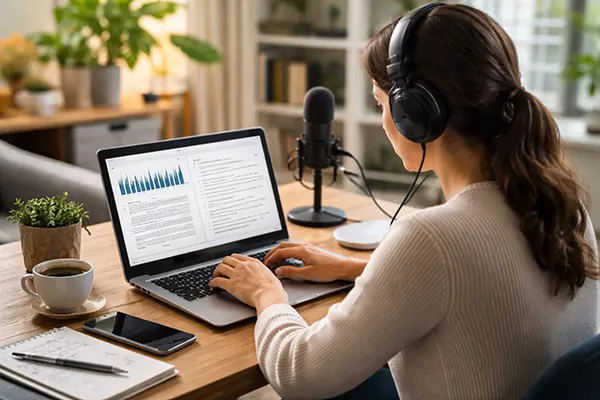
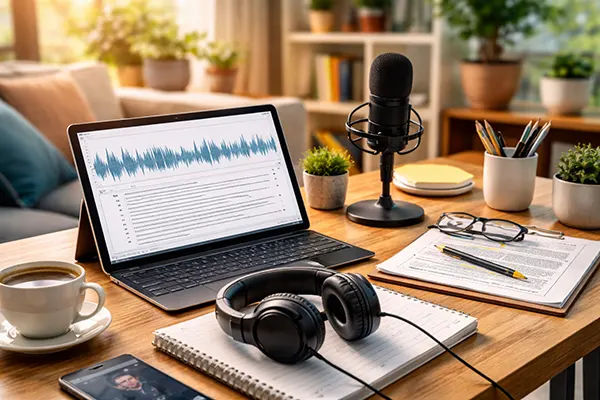
In terms of tools, most beginners start with a reliable laptop, good-quality headphones, and transcription software. Modern tools in 2026 often include AI-assisted playback controls, noise reduction, and time-stamping features, which help speed up the process without compromising accuracy.
Best Platforms and Software for Transcription Work
Several established marketplaces continue to offer entry points for beginners. Platforms such as Rev, TranscribeMe, and GoTranscript provide regular tasks, although pay rates can vary depending on complexity and turnaround time. These platforms are often used as a starting point to build experience and client feedback.
More advanced freelancers tend to move towards direct clients or specialised platforms like Scribie or Speechpad, where rates can be higher. Building a personal client base through LinkedIn or freelance websites has become increasingly common in 2026.
As for software, tools like Express Scribe, oTranscribe, and AI-enhanced editors are widely used. They allow for keyboard shortcuts, variable playback speeds, and integration with foot pedals, which can significantly improve productivity for those working regularly.
Realistic Earnings and Work Strategies
Earnings in transcription depend on several factors, including experience, niche, and efficiency. Beginners typically earn modest rates per audio minute, but as skills improve, it becomes possible to complete tasks faster and take on higher-paying projects. Specialised fields such as medical or legal transcription often offer better compensation.
Time management plays a major role in profitability. A one-hour audio file can take anywhere from two to four hours to transcribe, depending on quality and complexity. Experienced transcriptionists learn to estimate workloads accurately and choose projects that match their skill level.
Consistency is another important element. Rather than relying on occasional gigs, many successful freelancers build routines, working with repeat clients or maintaining a steady flow of tasks from multiple sources. This approach reduces income volatility and creates a more predictable monthly earning pattern.
Common Mistakes and How to Avoid Them
One of the most frequent mistakes is underestimating the time required for transcription. Beginners often accept large files without considering audio quality or speaker clarity, which can lead to missed deadlines and frustration. Starting with shorter, clearer recordings is a more effective approach.
Another issue is relying too heavily on automated transcription tools without proper editing. While AI has improved significantly by 2026, it still struggles with context, accents, and specialised vocabulary. Human review remains essential for producing professional results.
Finally, many newcomers overlook the importance of formatting and readability. A transcript is not just a block of text; it should be structured in a way that is easy to follow. Clear paragraphing, speaker labels, and logical flow can make a significant difference in client satisfaction and repeat work.